

Zea E-Books Collection
Accessibility Remediation
If you are unable to use this item in its current form due to accessibility barriers, you may request remediation through our remediation request form.
Files
Download Full Text (30.5 MB)
Description
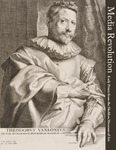
In the digital age, when videos are streamed and books can be read electronically, it is hard to fathom the revolutionary impact that printed images had when they first appeared in Europe around 1400. Their introduction changed forever the traditional practice of manually crafting images one by one, creating a world in which pictures could be reproduced almost without limit on a new material called paper, expanding the possibilities and audiences for images and texts of all kinds. This publication, which brings to light little-seen masterpieces from the Sheldon Museum of Art’s collection, explores the three major print techniques of the early modern period: woodcut, engraving, and etching. Along the way, it suggests not only how the print revolution evolved as it spread across Europe and the British Isles, but also how it gave rise to images that are intimate and public, sacred and secular. These pictures, which transformed the everyday lives of their original users, remind us of the many ways in which print technology continues to shape our own.
Contributions from Jesse Kudron, Tessa Terry, Andrea Nichols, Greg Spangler, Christopher Delano, Erin Boyle, Alexander Severn, Michelle Lindholm, Constance Hamer, Caitlin Donohoe, Kelli Dornbos, Sarah Penry, Kayla Johnson, and Amanda Washburn.
ISBN
978-1-60962-021-9
Publication Date
3-5-2012
Publisher
Zea E-Books
City
Lincoln, Nebraska
Disciplines
Ancient, Medieval, Renaissance and Baroque Art and Architecture | Art and Design | Graphic Design | History of Art, Architecture, and Archaeology | Illustration
Recommended Citation
Nosan, Gregory and Stewart, Alison G., "Media Revolution: Early Prints from the Sheldon Museum of Art" (2012). Zea E-Books Collection. 9.
https://digitalcommons.unl.edu/zeabook/9
Included in
Ancient, Medieval, Renaissance and Baroque Art and Architecture Commons, Graphic Design Commons, Illustration Commons