

Wildlife Disease and Zoonotics
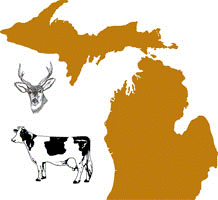
Michigan Bovine Tuberculosis Bibliography and Database
Accessibility Remediation
If you are unable to use this item in its current form due to accessibility barriers, you may request remediation through our remediation request form.
Date of this Version
4-15-2010
Abstract
Traditionally, APHIS has encouraged producers to voluntarily depopulate tuberculosis-affected herds to eliminate sources of infection. In accordance with the regulations in 9 CFR 77.7(c), an accredited-free State or zone in which a tuberculosis-affected herd is detected is reclassified to a lower status unless the herd is depopulated and an epidemiologic investigation is completed within 90 days of the detection and finds no evidence that the disease has spread. An accredited-free State or zone is also reclassified to a lower status if two or more affected herds are detected within the State or zone within a 48-month period. The current regulations do not provide any exceptions to these requirements for reclassification. Cattle and bison from States or zones reclassified to a lower status--usually modified accredited advanced--are subject to testing and other requirements for interstate movement. Furthermore, the regulations in 9 CFR part 50 authorize APHIS to pay indemnity to owners of animals destroyed because of tuberculosis. These payments provide a financial incentive for owners to elect depopulation instead of maintaining a herd under quarantine.