

Center, Internet, Wildlife Damage Management
Human–Wildlife Interactions
Accessibility Remediation
If you are unable to use this item in its current form due to accessibility barriers, you may request remediation through our remediation request form.
Managing Wildlife Means Managing Information
Date of this Version
Winter 2018
Document Type
Article
Citation
Human–Wildlife Interactions (Winter 2018) 12(3): article 17
doi: 10.26077/t3ay-3t73
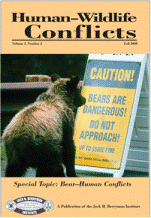
Special topic: Human–bear conflicts
Abstract
This issue of Human–Wildlife Interactions is dedicated to providing wildlife managers and their public stakeholders with better information regarding the management of human–bear conflicts, with the goal of improving human–bear interactions. Managing human–bear, or for that matter, human–wildlife conflicts (HWC) in general is becoming increasingly difficult as human populations grow and individual interests in wildlife diversify. When individuals who are polarized to one extreme or the other create the narrative, mitigating HWC tends to get very divisive, and as wildlife professionals we are rarely successful in pleasing all. To resolve HWC, managers tend to stick with the science, results from research, years of experience, and our education when making decisions, keeping emotions at arm’s length to maintain our professional objectiveness.
. . .
One way to do this is by making all of our research more readily available to the public. By engaging the public in the science, while it is being done, we are in effect ensuring an enduring partnership with a more conversant and educated public— and one that is better equipped to make decisions during the public process. Doing so will further our conservation strategies and enhance our credibility. This issue of Human–Wildlife Interactions contains several management case studies that describe innovative approaches used by wildlife managers to better inform and engage wildlife management stakeholders. There remains still much to do, but managers are committed to the task.