

Center, Internet, Wildlife Damage Management
Human–Wildlife Interactions
Accessibility Remediation
If you are unable to use this item in its current form due to accessibility barriers, you may request remediation through our remediation request form.
Review: Living with Bears Handbook
Date of this Version
Winter 2018
Document Type
Article
Citation
Human–Wildlife Interactions (Winter 2018) 12(3): article 16
doi: 10.26077/djqm-1e44
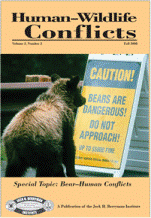
Special topic: Human–bear conflicts
Abstract
As global human populations continue to grow, more people will inevitably come into contact with wild animals, and human–wildlife conflicts will exacerbate. Wildlife attacks on humans by large carnivores will also increase as we continue to encroach on the urban– wildland interface. Thus, it is appropriate that increased human–bear conflicts are the topic of this Human–Wildlife Interactions special issue. Bears are among the most dangerous wild animals one can come across, yet most people have very little information on how to interact with them.
. . .
While the book is highly descriptive and necessarily repetitive, it is not technical. There are many helpful maps, tables, and pictures throughout the book, but it is definitely written for a mass audience, which I applaud. The book is accompanied by the website LivingWithBears.com, which has similar resources for dealing with bear conflicts. Overall, I highly recommend the Living with Bears Handbook to any wildlife manager or conservation staff member working in bear country as a useful reference tool for explaining bear interactions to the public. Hopefully more books like this will be written to help improve human–wildlife interactions.