

Zea E-Books Collection
Accessibility Remediation
If you are unable to use this item in its current form due to accessibility barriers, you may request remediation through our remediation request form.
Files
Download Full Text (36.7 MB)
Description
Lynd Ward (1905–1985) was born in Chicago and studied at Columbia Teachers College in New York City and at the National Academy of Graphic Arts and Bookmaking in Leipzig, Germany. He began working as a book illustrator in 1927, and in 1929 published this first “wordless novel,” Gods’ Man. He eventually published five more such works, as well as illustrations for more than 100 other books, plus drawings, lithographs, watercolors, and children’s stories.
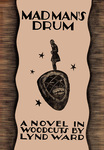
Madman’s Drum is his second wordless novel. It tells a dark story about a slaver who murders an African and steals his drum, which seems to carry a curse. The man gets rich, returns home and starts a family, but is later lost at sea. He stops his son from making music and pushes him toward books and science. The son becomes an astronomer, marries and has two daughters, but the drum’s curse destroys his life too. His mother dies in a fall on the stairs. His wife runs off with a fiddle player and dies. One daughter falls in love with a labor organizer who is framed for murder and hanged, and the second daughter is seduced and drawn into prostitution. Finally driven mad by all the tragedies, the astronomer-son becomes a wanderer, accompanied by a mad piper. Ward’s woodcuts are strong and dark, painting a grim picture of the sins of the fathers working out through generations. The original sin was the slave trade—where will its curse end?
Publication Date
2026
Publisher
Zea Books
City
Lincoln, Nebraska
Keywords
wordless novel, graphic novel, woodcuts, slavery
Disciplines
American Literature | American Popular Culture | American Studies | Arts and Humanities | Fine Arts | Race, Ethnicity and Post-Colonial Studies
Recommended Citation
Ward, Lynd, Madman's Drum. New York: Jonathan Cape & Harrison Smith, 1930; reprint Lincoln, Nebraska, Zea Books, 2026.
Included in
American Literature Commons, American Popular Culture Commons, Fine Arts Commons, Race, Ethnicity and Post-Colonial Studies Commons
Comments
Copyright by Macmillan 1930; now in public domain.